


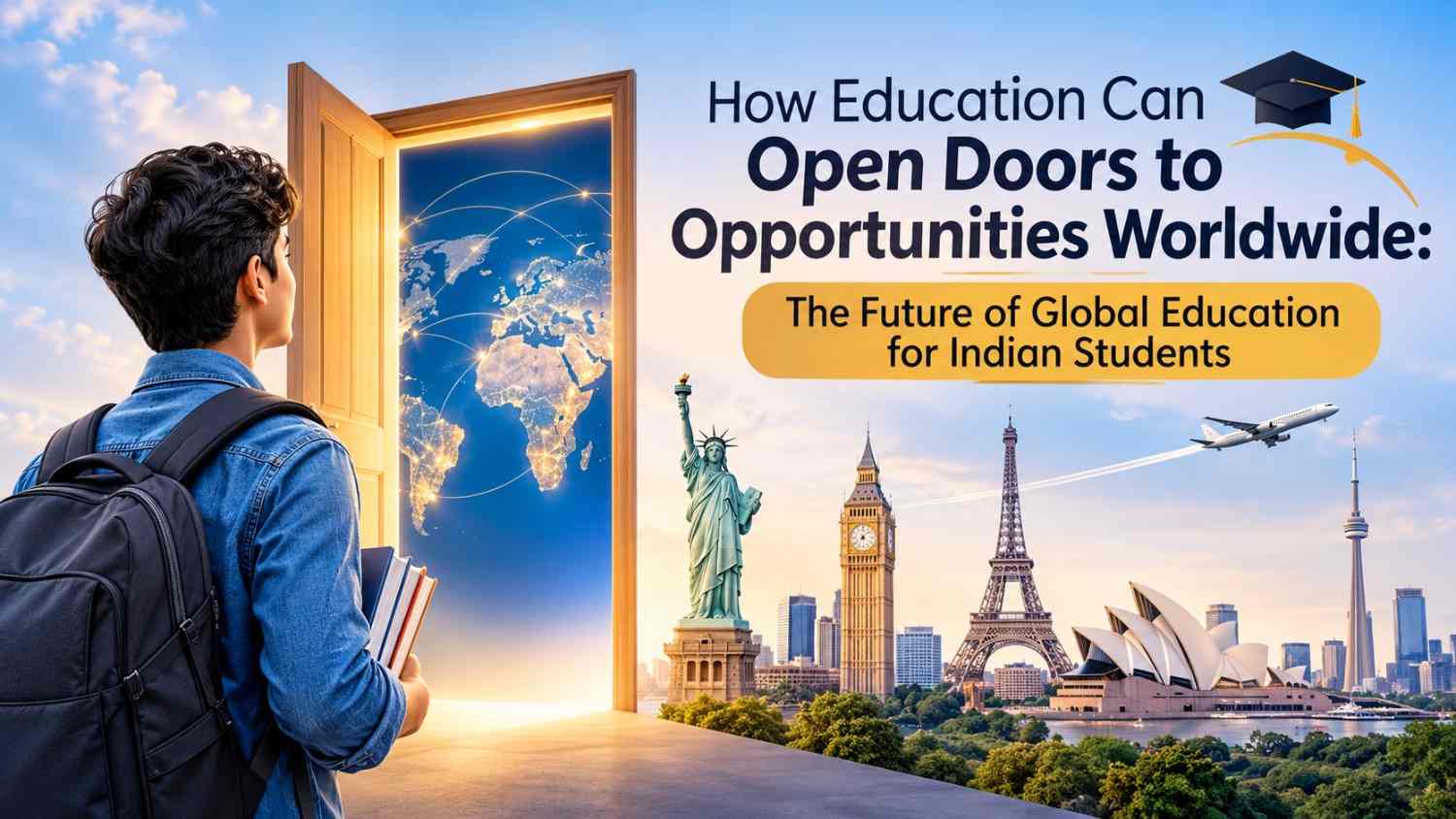
Education is no longer limited by geographical boundaries. It is the passport to global opportunities, international careers, innovation and a better future.
The world is changing faster than ever. Technology, artificial
intelligence, globalisation and evolving employment markets are transforming
the way people learn, work and build careers. In this changing environment,
education has become more than an academic qualification. It has become an
investment in personal growth, professional development and global
opportunities.
For Indian students, international education offers an exciting
opportunity to explore world-class universities, experience different cultures,
acquire internationally recognised qualifications and develop the skills
required to succeed in a competitive global economy.
Today, a student from India can study Artificial Intelligence in
Australia, pursue Engineering in Germany, complete an MBA in Ireland, study
Healthcare in New Zealand, explore Business Management in France or build a
career in the technology sector in the United States.
The opportunities are enormous. However, selecting the right country,
university and programme has become increasingly important.
How International Education
Expands Global Opportunities
Studying abroad is not simply about earning a foreign degree. It is
about preparing yourself for a world where opportunities are increasingly
international.
Here are some important ways international education can transform a
student's future.
1. Access to World-Class Education
International universities offer advanced learning environments, modern
laboratories, research facilities, industry collaborations and innovative
teaching methodologies.
Students gain exposure to international academic standards and practical
learning experiences that prepare them for professional challenges.
2. Global Career Opportunities
An internationally recognised qualification can help graduates explore
employment opportunities across different countries, subject to local
professional and immigration requirements.
Students also develop an understanding of international business
practices, workplace cultures and global industry expectations.
3. Development of Future-Ready Skills
The global employment market increasingly demands skills in:
International universities are continuously developing programmes to
address these changing industry requirements.
4. Cultural Intelligence and Personal Development
Living in another country helps students develop independence,
confidence, communication skills, adaptability and problem-solving abilities.
These qualities are valuable not only for international employment but
also for entrepreneurship and leadership.
5. International Networking
Students interact with classmates, professors, researchers and industry
professionals from different parts of the world.
These connections can create opportunities for internships, research
collaborations, employment and future business ventures.
Global Education Landscape:
Which Countries Offer Opportunities to Indian Students in 2026–2027?
The international education market is evolving. Traditional destinations
continue to attract Indian students, while several emerging destinations are
investing in international education and skilled talent.
According to India's NITI Aayog research on international student
mobility, the USA, Canada, UK, Australia and Germany remain among the major
destinations for Indian students.
However, changing immigration policies, affordability, employment
opportunities and industry demand are encouraging students to consider a wider
range of countries.
Let's explore some of the most promising destinations.
Australia: A Strong
Destination for Career-Oriented Education
Australia continues to be one of the preferred destinations for Indian
students seeking internationally recognised qualifications and
industry-oriented education.
Its universities offer a broad range of undergraduate, postgraduate and
research programmes.
Popular courses:
Why consider Australia?
International students can generally work up to 48 hours per fortnight
while their course is in session, subject to visa conditions. Eligible research
master's and doctoral students have different work provisions.
Australia has also strengthened its student visa assessment framework.
Students must demonstrate genuine study intentions, financial capacity and
appropriate academic progression.
Our perspective: Australia remains an attractive destination for students seeking
quality education in technology, healthcare, engineering, business and other
professional fields. However, course selection, institutional quality and visa
eligibility must be evaluated carefully.
New Zealand: An Emerging
Opportunity for Indian Students
New Zealand is becoming an increasingly interesting destination for
Indian students because of its quality education system, student-friendly
environment and developing international education partnerships.
An important development took place in October 2026 when the India–New
Zealand Free Trade Agreement entered into force.
The agreement introduced new commitments concerning skilled employment,
international student mobility and post-study opportunities.
Popular courses:
Why consider New Zealand?
Eligible international students can currently work up to 25 hours per
week during their studies, subject to visa conditions.
The India–New Zealand agreement also includes a commitment to protect 20
hours of weekly in-study work rights for Indian students if future policy
settings change.
From 16 November 2026, eligible Indian graduates completing doctoral
qualifications in New Zealand will be able to access post-study work visas of
up to four years.
These developments make New Zealand an important destination to watch
for the 2027 intake and beyond.
Our perspective: Students interested in management, healthcare, engineering, information
technology, agriculture and applied sciences should seriously consider New
Zealand.
Germany: An Excellent
Destination for Engineering, Technology and Research
Germany has established itself as one of Europe's leading destinations
for international education, particularly for students interested in technical
and research-oriented programmes.
Its strong industrial ecosystem, engineering expertise and
internationally recognised universities make it particularly attractive to
Indian students.
Popular courses:
Why consider Germany?
Graduates of German universities can generally apply for a residence
permit allowing up to 18 months to search for qualified employment, subject to
eligibility.
Students should also understand that many programmes require German
language proficiency, although several master's programmes are taught entirely
in English.
Our perspective: Germany is particularly suitable for students with backgrounds in
Engineering, IT, Computer Science, Mathematics and related technical
disciplines.
Ireland: A Growing Hub for
Technology, Business and Pharmaceutical Industries
Ireland has become an important European destination for Indian
students, particularly those interested in technology, business, finance and
life sciences.
Several international companies have established major European
operations in Ireland, creating an attractive environment for students
interested in professional development.
Popular courses:
Why consider Ireland?
Eligible graduates completing a Level 9 master's qualification can
generally receive up to 24 months under Ireland's Third Level Graduate
Programme, subject to its conditions.
Our perspective: Ireland is particularly suitable for students seeking postgraduate
education in IT, Business Analytics, Management, Finance and Pharmaceutical
Sciences.
Which Countries Should Indian
Students Prioritise for the 2027 Intake?
There is no single country that is best for every student. The right
destination depends on academic qualifications, career objectives, financial
capacity, language proficiency and long-term plans.
The following comparison can help students begin their research.
|
Country |
Strong Academic Areas |
Main Attraction |
|
Australia |
IT, Business, Healthcare, Engineering |
Quality education and industry exposure |
|
New Zealand |
Management, Healthcare, IT, Engineering |
Education quality and evolving India partnership |
|
Germany |
Engineering, AI, Automotive, IT |
Public university affordability and industry |
|
Ireland |
IT, Finance, Business, Pharma |
Multinational company ecosystem |
|
UK |
Business, Healthcare, Engineering |
Global university reputation |
|
USA |
AI, Computer Science, Research, Business |
Advanced research and innovation |
|
France |
Management, Fashion, Luxury, Engineering |
Specialised education and scholarships |
|
Italy |
Engineering, Design, Business |
Public university options and scholarships |
|
Netherlands |
AI, Business, Data Science |
International academic environment |
|
Japan |
Robotics, Engineering, Technology |
Advanced industrial ecosystem |
|
South Korea |
Electronics, AI, Business |
Technology and innovation |
|
UAE |
Business, Finance, Hospitality, IT |
International campuses and regional business hub |
15. What Should Students
Consider Before Choosing a Country?
Selecting a country based only on advertisements, rankings or
immigration promises can lead to poor academic and financial decisions.
Students should evaluate the following factors:
Academic Eligibility: Does the student's previous qualification meet
the university's entry requirements?
Course Relevance: Does the selected programme connect with previous education and future
career objectives?
Total Education Cost: Consider tuition fees, accommodation, living
expenses, insurance, travel and other costs.
Scholarships: Explore university scholarships, government funding and regional
financial assistance.
Visa Requirements: Understand the current financial requirements, documentation, genuine
student assessment and visa conditions.
Employment Opportunities: Research industry demand, internship
opportunities and the relevance of the qualification to the local employment
market.
Post-Study Opportunities: Understand the current graduate visa
conditions. A post-study work visa does not guarantee employment or permanent
residency.
University Recognition: Verify accreditation, institutional reputation
and professional recognition where applicable.
A well-researched decision can make a significant difference to a
student's international education journey.
16. The Future of Global
Education: Beyond Degrees
The future of education will not be determined only by where students
study. It will increasingly depend on what they learn, how they apply their
knowledge and how effectively they adapt to a changing world.
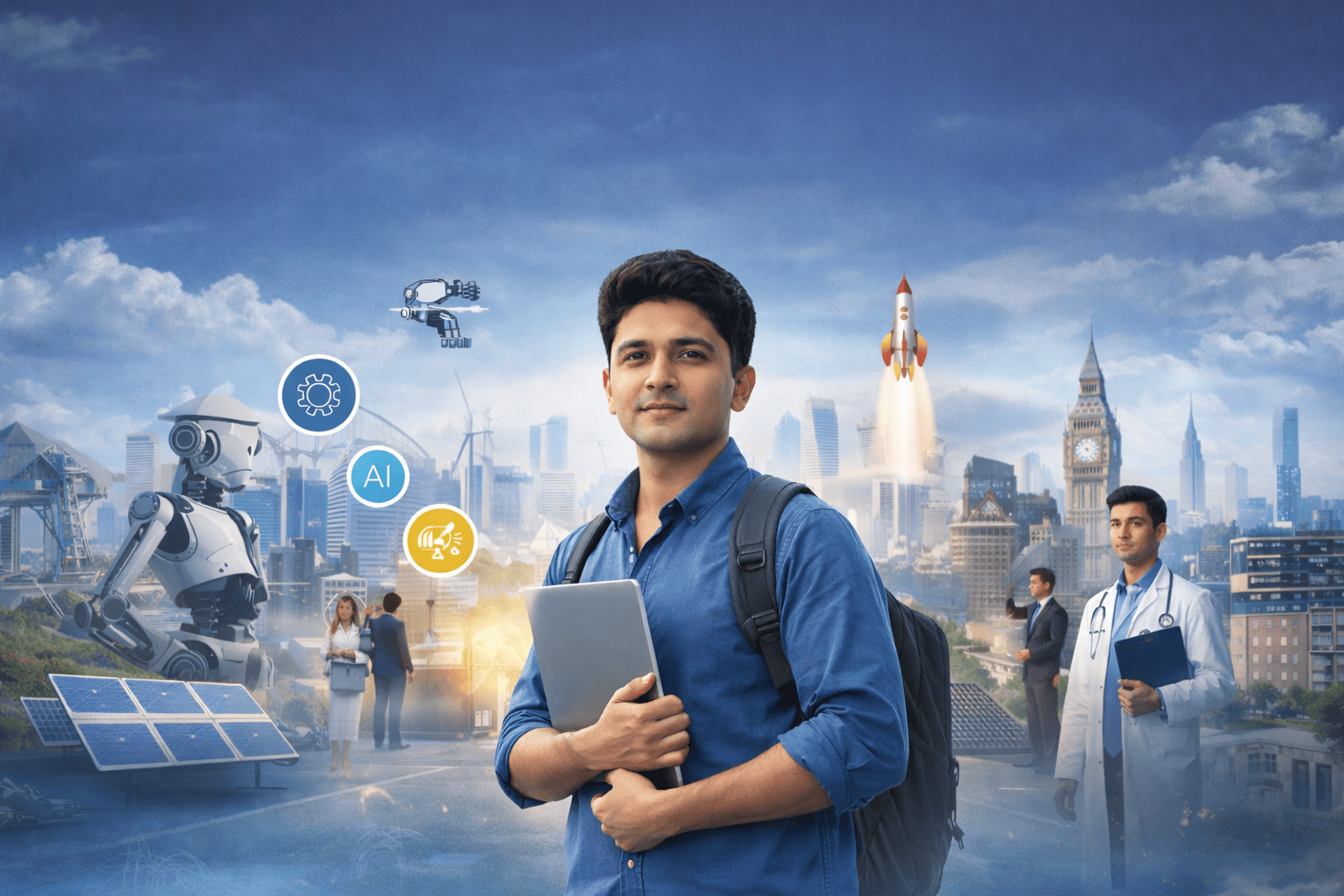
Artificial Intelligence, automation, healthcare innovation, renewable
energy, digital transformation and international business are creating new
career possibilities.
Students who combine academic qualifications with practical experience,
communication skills, digital capabilities and global exposure will be better
positioned to explore emerging opportunities.
International education should therefore be viewed as a long-term
investment in knowledge, confidence, professional capabilities and personal
transformation.
Conclusion: Your Education Can
Take You Anywhere
The world is full of opportunities, but accessing them requires the
right direction, preparation and decisions.
Australia, New Zealand, Germany, Ireland, the UK, the USA and several
emerging European and Asian destinations offer Indian students different
academic and professional opportunities.
The key is not to select the most popular country. It is to select the
country, university and programme that best match your academic background,
financial circumstances and career aspirations.
A foreign degree should not simply be a passport to another country. It
should be a foundation for building a successful global career.
At Interedwise Education, we believe that every student has the
potential to achieve more when given the right guidance and opportunities.
Our mission is to help students discover the right academic pathway,
explore suitable international universities and make informed decisions about
their future.
Because education is not just about reaching a destination. It is about
discovering how far you can go.

Dr. Kaamendra Dahat
Interedwise Education Pvt. Ltd.

09 Apr 2026

09 Apr 2026

08 Apr 2026
08 Apr 2026

08 Apr 2026

07 Apr 2026

07 Apr 2026

02 Apr 2026